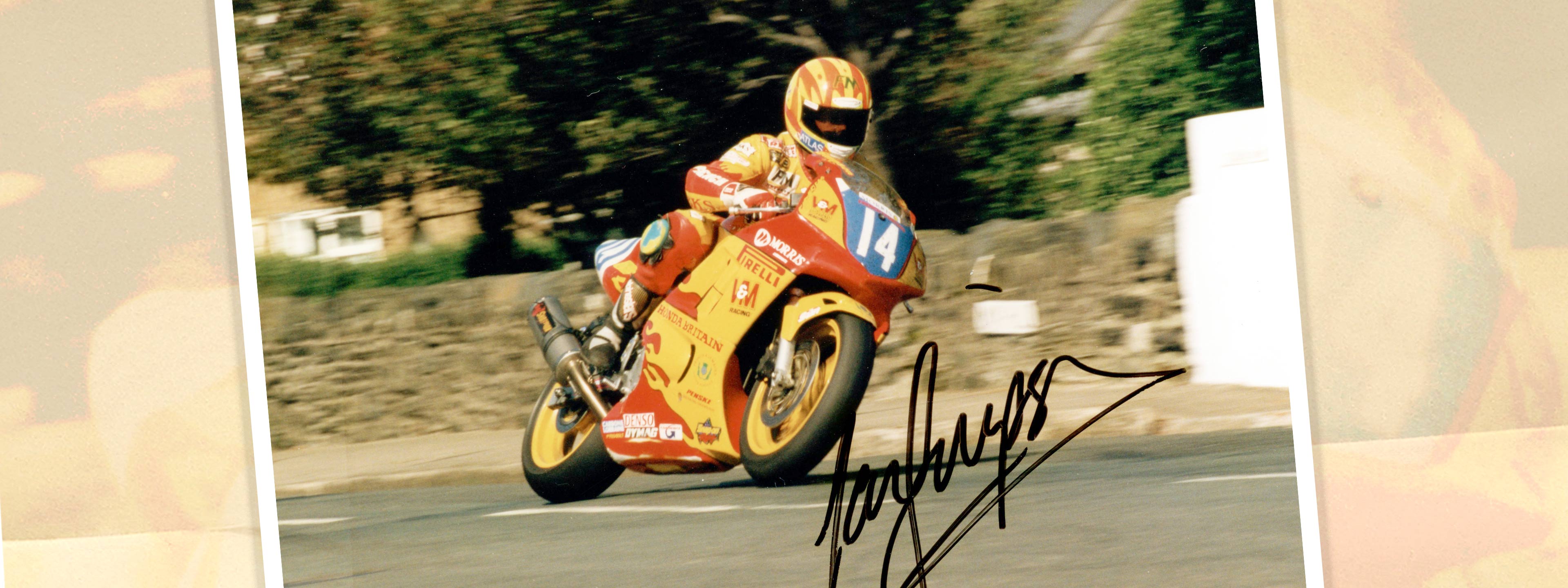
TESTING, TRAFFIC AND THE HEEBIE-JEEBIES - IAN SIMPSON REMEMBERS THE 1997 JUNIOR TT
After a year of dominance from Phillip McCallen in 1996, his rivals arrived at the Isle of Man for the 1997 edition with the bit between their teeth, desperate to stop a similar run of victories.
Ian Simpson came to that year’s TT having spent the first half of the season going toe-to-toe with, and beating, McCallen on short circuits on a weekly basis in the British Production Powerbike Championship. As such, the two were the favourites going into the Junior TT, and Simpson knew this was his best chance at coming away with his first TT victory.
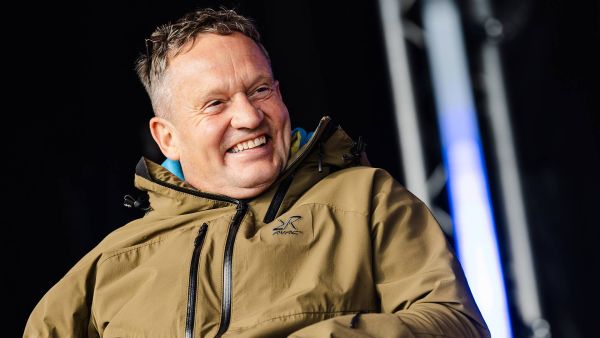
Ian Simpson reflects on the 1997 Junior TT
“I always thought I’d have beaten him, but he’d probably say the same about me,” said Simpson. “I know on short circuits I’d have beaten him a lot more than he’d have beaten me, but he’d probably have beaten me more on the roads than I’d have beaten him.”
Despite McCallen’s expected advantage on the TT course, Simpson’s optimism also stemmed from what he believed was a slight tyre advantage - this still being an age where tyre wars were very much raging.
“In 1997 we were on Pirellis, which were just not as good on the short circuits,” explained Simpson. “They just didn’t have the grip of the Dunlops. But on the TT they were really stable, where ultimate total grip isn’t as important, it’s more about stability. Rather than having any disadvantages I felt like we had an advantage.”
When the race began, Simpson was in fine form, and right from the off it looked like there was little question as to who would be coming home with the victory. Not only did Simpson break the lap record for a 600cc machine from a standing start, but he had also latched onto the back of McCallen for the second run over the Mountain, despite starting 30 seconds down the road. The Scot eventually passed his rival through Ramsey on lap three of four, and controlled the race to secure a stunning first TT win of an eventual three.
So was Simpson’s success largely influenced by the Pirelli rubber, or was there more to it than simply tyres?
“I think it was me learning the TT a lot better by then,” offers Simpson. “I didn’t go in 1995, I didn’t have my own bikes in 1996, it was just a one-off ride, then 1997 was the first time since 1994 that I had a bike I raced every week. I think the biggest advantage is coming to the TT with a bike you’ve tested in Spain. You’ve set the footrest up, you don’t need to move levers, you don’t need to move seats, you don’t need to move handlebars - that’s all been done in December. For me that was massive. Even now, the guys getting the lap records are usually on the bikes they ride every week. You’re not jumping on someone else’s bike and I think that was the biggest advantage.
“I’d also learned the track well by 1997, which I probably didn’t any other year that I’d been. I’d started to get comfortable, learning which corners you don’t need to stick your head up to have a look, you just keep tucked in. You know exactly where you’re going, you know how quick you can take it, while not thinking about your bike because that’s already set to your liking before the season even starts. Those things coming together is the secret.”
Having caught McCallen halfway through the race, one of the quirks of the Isle of Man’s unique time trial formats appeared. A tactical element not seen in traditional mass start races, where you can simply follow a rider who’s started ahead of you, knowing that technically you’re already beating them by a minimum of ten seconds. With his biggest rival firmly in his sights, Simpson was given the option to pass McCallen and push on for outright pace throughout the remainder of the race, or sit back safe in the knowledge his closest rival was right where he wanted him.
“Obviously you would sit behind if you knew you were ahead and in a winning position - you always want to win at the slowest speed,” explained Simpson, evoking the philosophy attributed to 1950s Formula 1 legend Juan Manuel Fangio. “Lap records will always get broken but you can’t take a win away. I never used to think much about going for the lap record, I just tried to win the race. You would try to work out who’s going to be your rivals and where they’re likely to be on track.
“A start number can be really, really important, to know where you are and so you don’t get held up as well. I can remember starting at number 23 for the 600 race in 1993 and I was absolutely spewing. I was 1991 British 600 Champion and was leading in 1992 by miles but then broke my leg and they gave me number 23 for the TT in 1993. I’d only done one TT by that point so I wasn’t going to win the race, but I wasn’t going to finish 23rd! I ended up getting held up loads by other riders and finishing fourth, so that was my first experience of a high number being quite disadvantageous because you have to work through so much traffic. You can lose a lot of time around the island trying to pass someone safely.”
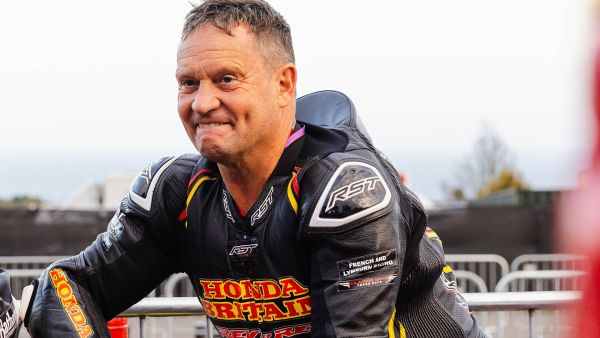
The sound of the TT klaxon still gives Ian "the heebie-jeebies"
While some riders taking part in the parades at this year’s Classic TT will be reunited with bikes and outfits they’ve not seen for years, Simpson brings a bike he knows incredibly well, considering it currently resides in his house. Despite that familiarity, he admits that the nerves will be jangling as soon as he gets set to head off down Bray Hill for the parade lap.
“I know it sounds ridiculous,” said Simpson, "but I still get really nervous sitting on the startline even for a parade lap! I can be sitting at home listening to Manx Radio and hearing the klaxon for paddock announcements will give me the heebie-jeebies! There’s nothing else like it. I get nervous as hell just doing a parade lap when we’re miles off the pace, just waving to the marshals, but I’ll be alright once we get going. If you had to do a parade lap at Knockhill or Scarborough you don’t get nervous, but at the Isle of Man you do. It’s hard to explain, unless you’ve been here you just don’t understand.”