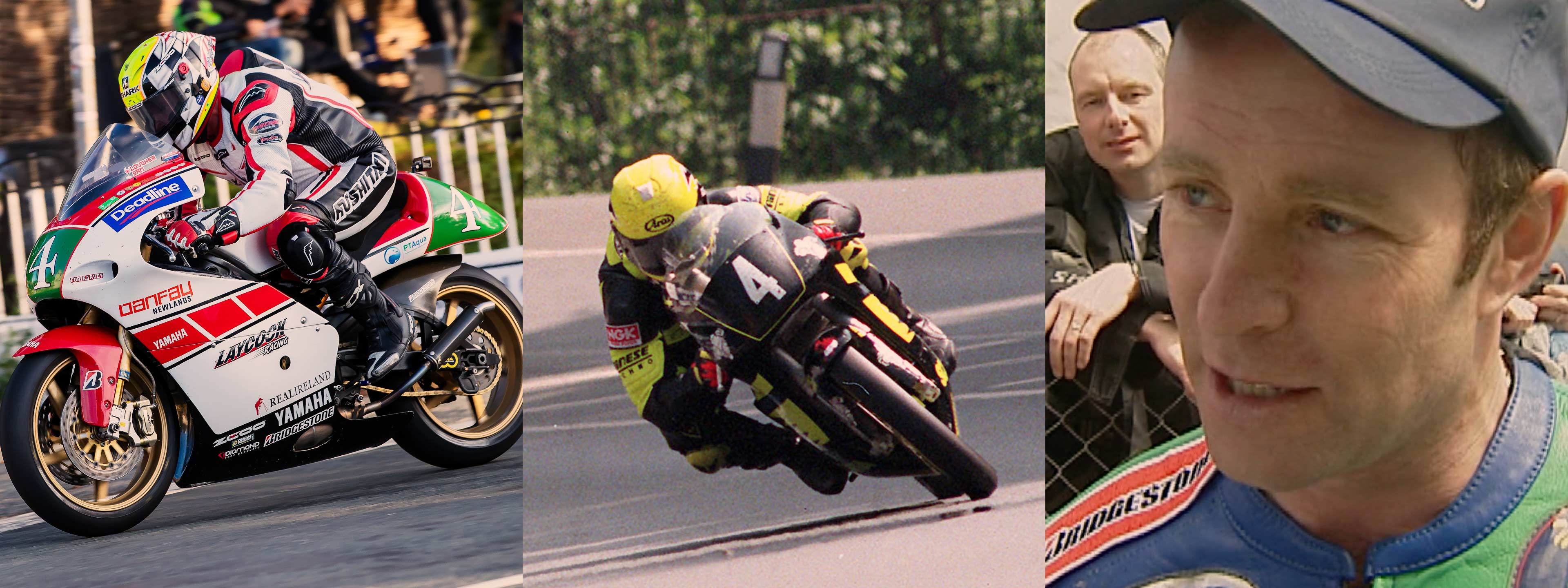
THE RACE WITHIN A RACE: HOW RIDING A 125 AT THE ISLE OF MAN IS A CHALLENGE OF ITS OWN
This year’s Classic TT brings back a name not seen on the Mountain Course for 22 years, nor at the Isle of Man TT itself for almost 18.
The Ultra Lightweight TT, as its name suggests, is a race for the smallest category of bike to compete around the Isle of Man, held for the vast majority of its history at the TT for motorcycles that did not exceed 125cc engine capacity.
First appearing at a TT in 1924, the Ultra Lightweight was initially held for motorcycles not exceeding 175cc and was a mass start as opposed to the more common interval start seen today. Scotland’s Jock Porter earned the honour of being the first rider to win, completing the three lap race in two hours and 12 minutes, four and a half minutes ahead of Freddie Morgan and earning £20 for his troubles (approximately £1000 in today’s money).
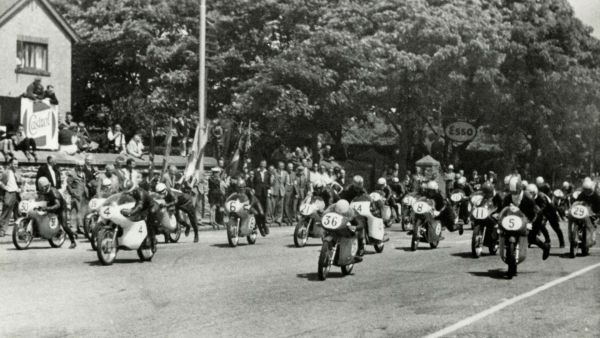
The 1959 Ultra Lightweight race gets underway from a mass start on the Clypse Course.
After just two years, the race was shelved before returning again in 1951 with the 125cc regulations in place. This iteration of the category only lasted three years before it was moved, along with the Sidecar TT, to the 10.92-mile Clypse Course between 1954 and 1959. Returning to the Mountain Course in 1960, the event was unchanged until being dropped in 1974.
Fifteen years later the race returned, entering an era of dominance for the iconic Dunlop family before once again being dropped due to dwindling entries in 2004. One last hurrah came for the category in 2008 and 2009, although not on the Mountain Course, with the Billown Circuit hosting the Lightweight and Ultra Lightweight TTs for that year.
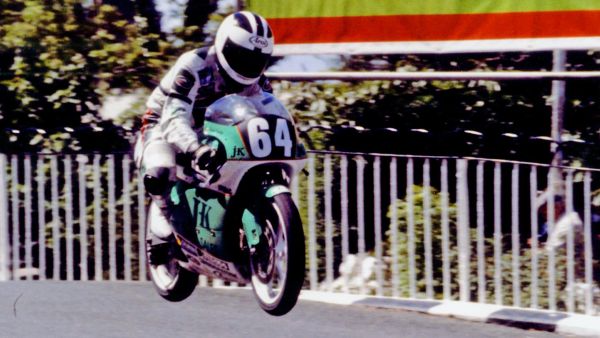
Robert Dunlop aboard his 125cc Ultra Lightweight machine during the 1990s.
It’s this final era that will be recreated at the Classic TT this year, with the high-revving two-stroke screams of the RS Hondas, TZ Yamahas and Aprilias, as well as the the unmistakable smell of two-stroke oil, returning to the Mountain Course for the first time since 2004.
It’s not just the machinery turning back the clock, however, with riders having to turn to a style of riding totally alien to what most modern riders will be used to. To get an idea of just how hard it was to ride a 125 around the island, we turned to perhaps the best person you can ask: Ian Lougher. A ten-time TT winner, all but three coming on 125 or 250cc two-strokes, there are few who can provide better insight into racing these motorcycle equivalent of terrier dogs around the TT.
“They were very difficult really,” explains Lougher when asked what it was like riding the smaller capacity machinery. “You’ve got to have it in the right gear, just at the right point in the power band, and on a 125 the power band only had probably 2000 revs, so going up the Mountain Mile sometimes you had to really choose your gearing. If it got windy or the wind was blowing in the opposite direction you’d have to think about whether you wanted to leave it alone and put up with it, or take a chance and gear it down or up or whatever.
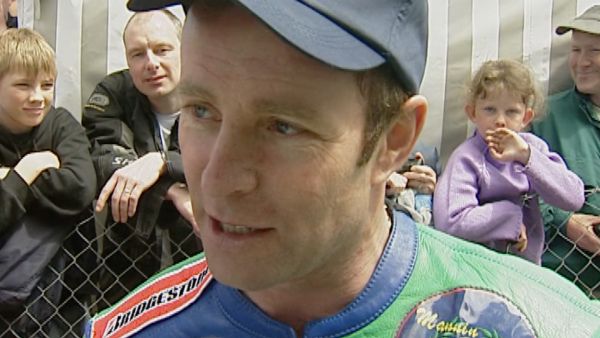
Ian Lougher celebrates victory in the 2002 Ultra Lightweight TT.
“It was something that we coming up with the two-strokes grew used to, and it became quite easy for me. Going up the Mountain Mile sometimes on a 125 and you get it fifth and you’re squeezing every little 100 revs to change gear just at the right point as fast as you could. There were no quick shifters in those days either, so you’d just have to close the throttle and hit the gear lever at the right spot. If you hit a bump at the wrong time and you’d miss a gear or something, then you’d have to go through the whole process again.
“You’ve got fifth gear, into sixth gear and then it’s a bit of a headwind, back down into fifth and revving it, revving it back into sixth again, same again - sometimes we’d have to do that three times over the Mountain. We’d also be trying to keep the thing on the side of the tyre because the gearing would be slightly lower, coming into fast corners and we just don’t lift the bike to the bigger, higher, part of the tyre in the middle. You’d try and keep it on its side and gradually bring the bike upwards. Alternatively, if the carburetion wasn't quite correct, you could be one jet size out and the difference would be night and day. You just had to get it right. If you went too much it would seize on you, and sometimes you wouldn’t even make it to Ballacraine on the first lap!”
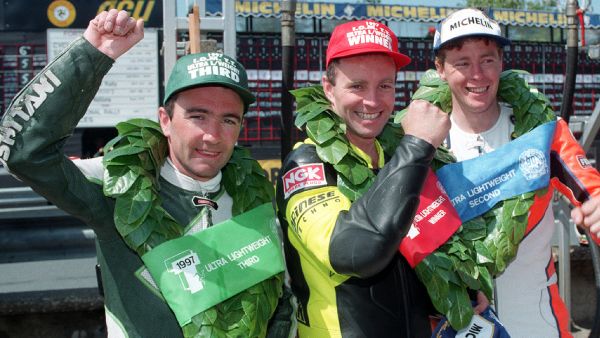
Ian Lougher celebrates victory alongside Denis McCullough and Robert Dunlop on the 1997 podium.
But surely riding a 125, far smaller and lighter than a big Superbike, would provide a more comfortable racing experience? Not for Lougher, a man who you could make a case for was built for Ultra Lightweight racing given his own diminutive stature.
“It was a real art form racing a 125,” he explains, “and a totally different thing to ride than a big bike, obviously. You were so crunched up. I always say that when you got off the bike at the end of the race, your thighs would be almost shaking. It was like being locked in a cupboard for a week.
You were trying to keep under the screen and yet you’re just naturally in a scrunched up position because of how small the bike was. It was so demanding. Things like going through certain fast corners, you only have to look at the corner and you’d be hitting the kerbs, you had to be really careful. Despite that, you were still probably going through a corner such as Ballagarey, probably as quick as a Superbike on a tyre which has a two to three inch rear rim whereas the big bikes have got six inch rears. So you had a very small contact patch and had to be really precise with it.
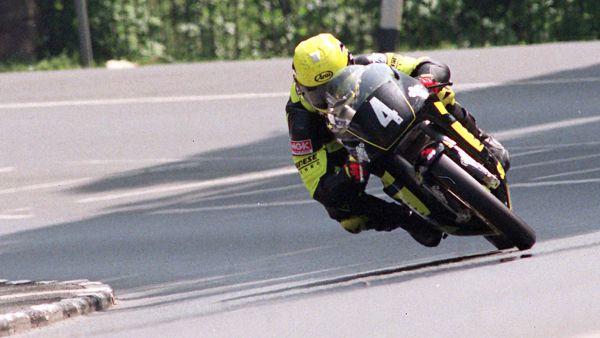
Ian Lougher pushes his 125cc Ultra Lightweight machine through Braddan Bridge during the 1997 TT.
"Even though you’re going a lot slower you’d still be doing 135-140mph, and for much of the lap it’s full throttle. I remember I was racing for Paul Bird on the Stobart bike, and we put some data logging on the Superbike and I was full, absolutely flat chat, on the throttle for 13% of the lap. We put it onto the 600 and it was 75%, that’s the difference. So for a 125, we were doing 110mph average lap and the top speed was around 135mph, so it shows you how fast we were going through the corners.”
A word that’s often associated with racing at the TT is “confidence”, and if you were to watch one of Milky Quayle’s onboard videos, he’ll point out multiple times that it can take the entire week of practice before you gain the confidence on a Superbike to take certain corners flat. For Ultra Lightweight runners, however, that’s simply not an option.
“As soon as you lift and open the throttle again you lose all of your momentum for probably the next mile, so you’ve really got to be confident,” continues Lougher. “It always helped me if I was going well in the British Championships, which I always used to go and do, and back and forth to the other road races as well. If I was going really well on those then it gave you confidence to sort of ‘attack’ the Isle of Man, if you live. A bit more, that little edge of confidence definitely makes the difference.”
Besides the unique physical demands of the small two-stroke 125s, racing in the Ultra Lightweight TT also came with its own specific challenges, namely sharing track time with another class of motorcycle altogether. During its final run at the TT, the Ultra Lightweight was run alongside the Singles and later Supersport 400 TTs, and this year at the Classic it will be run alongside the Lightweight Classic TT.
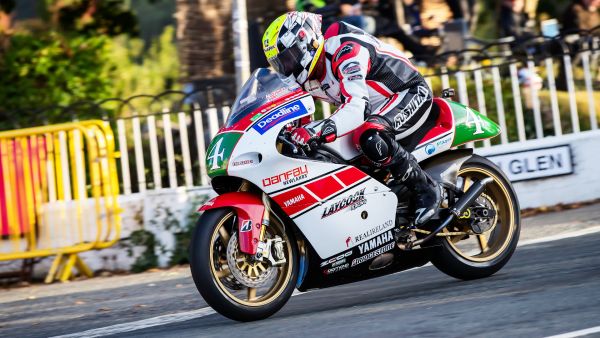
Ian Lougher races his Lightweight machine at the 2025 Classic TT, finishing second before retiring from the race.
While each category was a full, independently scored, TT in its own right, it was inevitable that the front runners of the second class would catch those near the tail end of the initial wave of riders.
“Sometimes, especially with the Singles, you would catch them," remembers Lougher. “You’d have to carry so much corner speed on a 125, and being a two-stroke you had no oomph on the way out, but the 400s and Singles were quite quick out of the corners so they’d just pull away. It was very difficult. If you speak to anybody who comes from the two-stroke side of things, when they’re up against four-strokes they can just stop it, turn it, and put on the gas again. By the time you got back on them again you’re in the braking zone so you had to outbrake them or get past them in some way.”
For Lougher, though, the running of the Ultra Lightweight TT at the Classic will be a chance to revisit those years he went toe-to-toe with the Dunlop brothers, and came out on top on more than a few occasions. Having retired from racing at the end of 2025, after a career that makes even John McGuinness look young, is there any part of the ten-time winner that wishes he could race a 125 at the Mountain Course one more time?
“It’d be great to jump back on a 125 but I’m getting too old and I wouldn’t be able to physically crump up enough now,” he admits. “I have ridden a 125 over the last year just for fun, but going around the Isle of Man is bad enough on the 250 I was riding up until last year. Even then we were having to move the footrest back a little bit. Just moving them 10mm makes a massive difference, it’s so much more comfortable. But you’re limited to how much you can move them because of the exhaust pipes etc. But yeah, I would like to do it but my brain says no!”