PRIVATE EYE: INSIDE LIFE AS AN ISLE OF MAN TT PRIVATEER
When delays play havoc with the Isle of Man TT schedule, the disruption can make things difficult for teams and riders to keep on top of - but what happens when the team is the rider and a couple of friends?
Of course, the difficulty is the same across the paddock, whether you’re a front running team with manufacturer support or a privateer entry. But where the big teams have numerous mechanics to share the load, those further down the paddock can often have fewer than five members in total - including the rider.
Racing at the TT is a mammoth task, an International level event that requires teams to be at their absolute best for two weeks. For this reason, the level of preparation that you’ll see at the TT is akin to that in a National level, or even World Championship, paddock and that professionalism stretches across the entry.
Even if those further down the grid may have more rudimentary setups with regards to awnings, branding and corporate facilities, if you were to look at the actual hardware being used, it’ll be prepared up to that same standard you’ll expect to see in the lower entry numbers.
For example, every single machine must go through the strict technical inspection process before it’s allowed out for any session, and almost every team will strip their bike down once that session ends, be it qualifying or a race, and prepare it for its next trip down Bray Hill.
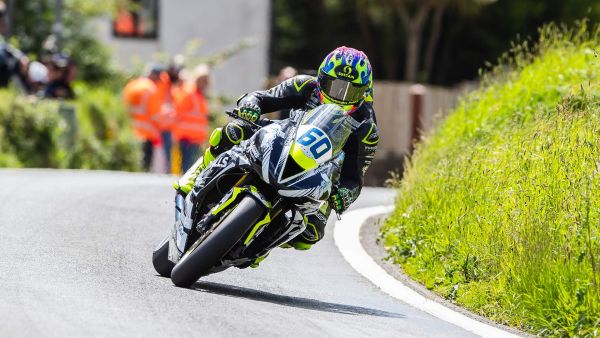
Every single machine must go through the strict technical inspection process before it’s allowed out for any session
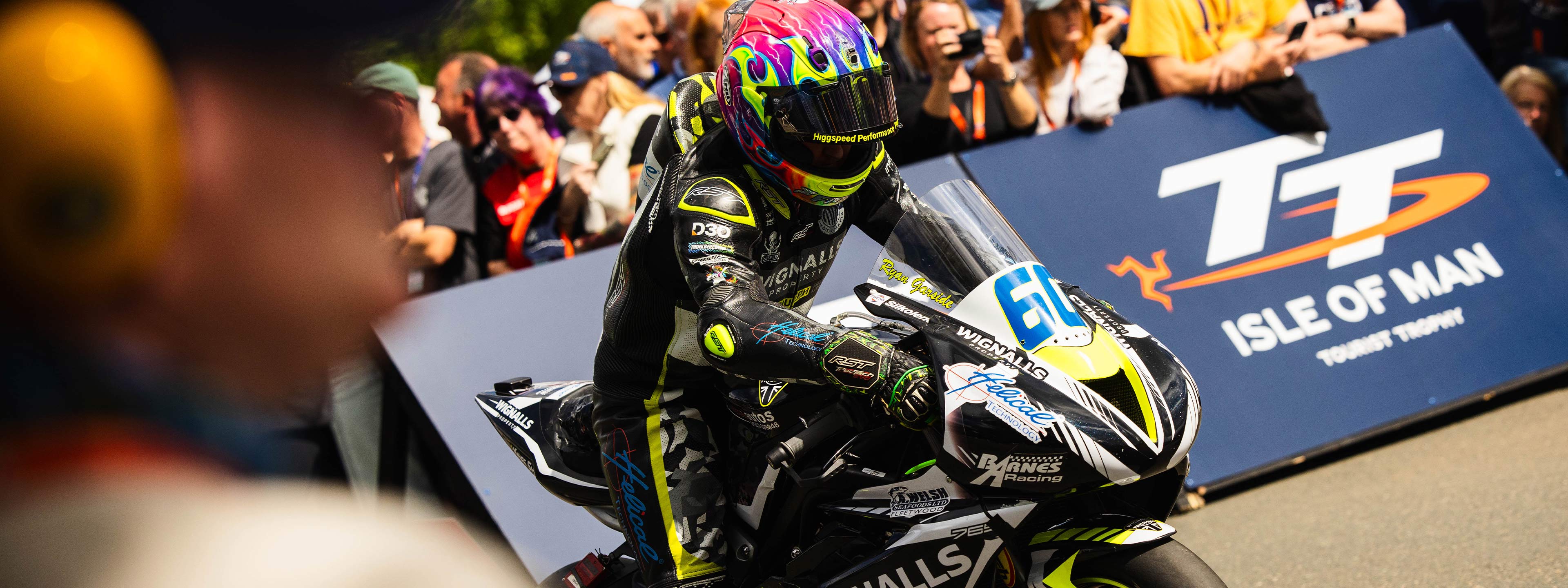
“It’s difficult to be fair because we’ve got to do everything,” explained Ryan Garside, a Manx Grand Prix graduate competing at the TT for the first time in both Supersport and Sportbike classes. “I don’t have a proper team manager, and I don’t have anyone whose job it is to do things like take my helmet to the Arai stand and get them cleaned up. We’ve got to do everything ourselves.”
As is the case at all levels of motorsport, privateer competition at the TT is hugely reliant on sponsorship, with many of those lower down the paddocks simply unable to fund racing without help from commercial partners.
“Finding the money to do it is obviously always difficult,” continued Garside. “I haven’t got a pot to do anything in. Thankfully I’ve got some really nice sponsors who have helped me out, bought me two lovely bikes. Tom has bought the Wignalls Property Triumph 765 and then we’ve got Mark who’s bought the It’s Legit Racing 660 Triumph as well. Without people like that there’s no way I could do it.”
Outside of physically being at the TT itself, many privateers will have a significant lack of hours to prepare their machines ahead of arriving on the Isle of Man compared to the big works-backed teams at the top of the paddock. While the top professional teams will have preparation as their jobs, for the likes of Garside and his privateer contemporaries, any work on their bikes need to be done alongside their “normal” jobs.
“It is hard work, to be fair, because obviously you’ve got a lot to try and do in the same amount of time as everyone, but we’ve all got full time jobs to balance alongside as well,” he said. “We collected one of the bikes quite late, so we didn’t get much time to prep that as well. It was just about getting round to ordering it, getting it built by PHR and then collecting it. Then changing things and getting it right ready to get here, it’s hard work.”
While of course there’s close relationships among all teams at the TT, there’s an argument to be made that those working as a small group of friends perhaps has a slightly closer knit environment than you’d find among those who are doing it as their profession, and the closeness of Garside’s setup is evident from spending just a few minutes with the team.
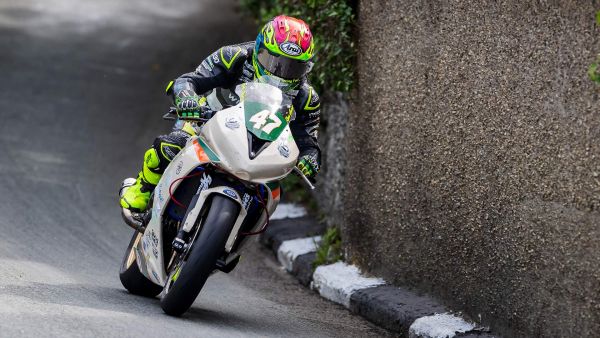
For the likes of Garside and his privateer contemporaries, any work on their bikes need to be done alongside their “normal” jobs.
“It does bring us closer together in a way,” Garside offered when asked whether all mucking in brings the team closer as a result. “We are all just mates and we’re all just giving each other grief non-stop all day. I was mates with most of the guys here before and then Tom and his mates and Mark and his mates have all sort of become one big clan, and we spend the whole fortnight picking on each other. That’s how camaraderie works isn’t it?!”
While you wouldn’t always associate a privateer team with innovation in a paddock that includes teams with big sponsors and manufacturer backing, Garside is actually setting a TT first in the paddock this year. Through one of the team’s sponsors, Garside will become the first ever competitor in the history of the Isle of Man TT to compete using sustainable fuels.
“Sustainable fuels was something Mark sorted out with Sustain Fuels,” he explained. “It’s 40% renewable resources, basically farm waste, wheat grain waste and a lot of it actually comes from bakery waste, which I didn’t realise. It’s all fully recycled stuff, they don’t grow anything to make the fuel, it just comes out of stuff that would otherwise go into the bin.”
“Obviously that’s the way the world is going to go eventually, I don’t want people thinking I’m some kind of eco-warrier, I’m not, but we do have to think about it. I’ve got an electric car, an electric scooter and we do have to be cautious of the environment because the whole world wants us to. It’s quite an un-environmentally friendly sport so we’ve got to make it as green as we can. Using this fuel proves one way that we can make it that little bit more sustainable. In terms of results or standards - we’ve had it on the dyno - it’s absolutely identical to the top spec race fuel that anyone else can get their hands on and it’s no more expensive, so why wouldn’t you?”
Garside completed all three races he entered at this year's TT, recording finishes of 35th and 34th in the two Supersport TT races and an impressive 27th place in the Sportbike TT. With a best lap of 117.266mph in the Monster Energy Supersport Race 2, it was almost certainly a productive week on the Mountain Course.