SPORTBIKE REGULATIONS ADOPTED FOR TT 2027
The 2027 Isle of Man TT Races will see the adoption of full Sportbike regulations as the class completes its phased evolution from the Supertwin machines that have formed the basis of the category since 2012.
The announcement marks the end of a multi-year transition that dates back to 2024, following a stakeholder consultation process run throughout the spring of 2025, and the phased introduction of Sportbike-specification machines at TT 2026.
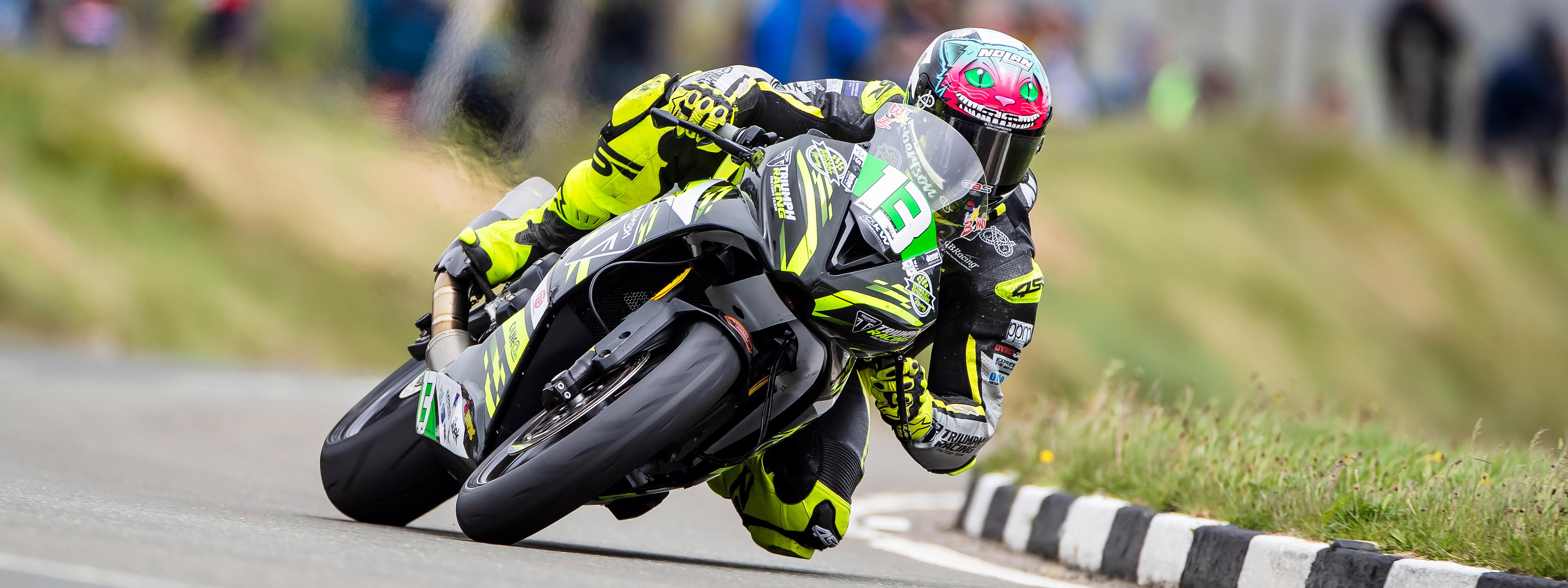
Running alongside existing and highly-developed Supertwin bikes, Dominic Herbertson was this year’s standout Sportbike performer as he secured a 7th-place finish in the Carole Nash Sportbike TT. Herbertson lapped just shy of a 120mph average speed on the official KTS Macadam Triumph Factory Racing Daytona 660, while newcomer Rhys Stephenson also impressed on his TT debut and showcased the potential of the class as a pathway for talented younger athletes from national competition.
The news brings 14 years of Supertwin racing to a close as, under an updated technical framework, Supertwin-specification machines will no longer be eligible.
Introduced under the storied banner of the Lightweight TT, the early years of the class saw debut TT wins for James Hillier, Dean Harrison and Ivan Lintin, with Michael Dunlop MBE and the factory Paton S1-R becoming the dominant force in more recent years, taking honours in six of the last eight encounters.
SUSTAINABILITY, PARITY, AND MANUFACTURER ENGAGEMENT
The full adoption of Sportbike regulations has been shaped by several key factors critical to the long-term health and growth of both the category and the TT as a whole.
While the relatively open nature of the Supertwin rules made it the last remaining class to offer true engineering freedom and technical innovation, that open framework ultimately drove up costs and led to bespoke, limited-run machinery or costly development to build a truly race-winning package.
In contrast, Sportbike machinery operates within significantly tighter regulations that limit build and running costs for teams and privateers. Crucially, the class utilizes a proven Balance of Performance (BoP) system to deliver close, competitive racing across a diverse field of machines featuring varying engine configurations and design philosophies.
This technical parity and commercial relevance has sparked significant interest from major motorcycle manufacturers, several of which have taken direct involvement with teams and the category as a whole - an area where Supertwin engagement had steadily waned.
TECHNICAL REGULATIONS
From 2027, technical regulations and BoP rules for the Sportbike TT Races will mirror those of the National Sportbike Championship, creating complete technical continuity for competitors and teams competing across both short-circuit and road racing calendars.
To accommodate the unique high-speed demands of the 37.73-mile Mountain Course, minor TT-specific modifications will be permitted - mirroring the approach taken in the Superstock class at the TT. Primarily, these allowances will allow for minor modifications to the fairings and frontal area of the machines, providing greater wind protection for the riders on the extensive, high-speed sections of the TT Course.
A PATHWAY FOR YOUNG TALENT
By aligning with the British National Championship, the class also creates a viable, cost-conscious pathway for younger competitors, enabling athletes to transition across to the TT at an earlier age and without having to progress through the Supersport and 1000cc categories on short-circuits, as had become the prevalent route for newcomer TT competitors.
Ed Wilson, Head of Sport, Isle of Man TT Races
“The full adoption of Sportbike regulations for 2027 represents an exciting and logical next step for the TT.
“Supertwin racing has delivered some fantastic competition and exceptional engineering during its time at the event, but the class had increasingly developed in a different direction to the wider production-based racing landscape. The level of specialist development involved also meant that cost was becoming a significant barrier to participation and could have a major influence on competitiveness.
“Moving to Sportbike gives us a much more relevant and sustainable platform. Importantly, it also creates direct alignment with championships elsewhere, providing a clearer route for younger riders onto the Mountain Course while opening the class to a broader range of current and future manufacturers.”
Dave Hagen, Technical Director, Isle of Man TT Races
“Adopting the National Sportbike technical framework gives us a proven set of regulations rather than trying to create a bespoke TT formula.
“A key part of that is the Balance of Performance system, which allows different eligible machines and engine configurations to compete within a much more closely controlled performance envelope.
“That should reduce the advantage available through expensive technical development and create a more level playing field, where preparation and rider performance have a greater influence on the result.
“It also gives us a framework that can continue to evolve alongside the wider Sportbike category as new manufacturers and machines enter the market.”
The full Technical Regulations for the Sportbike TT Races and all other classes for the 2027 Isle of Man TT Races will be issued in November 2026.