SIDECAR
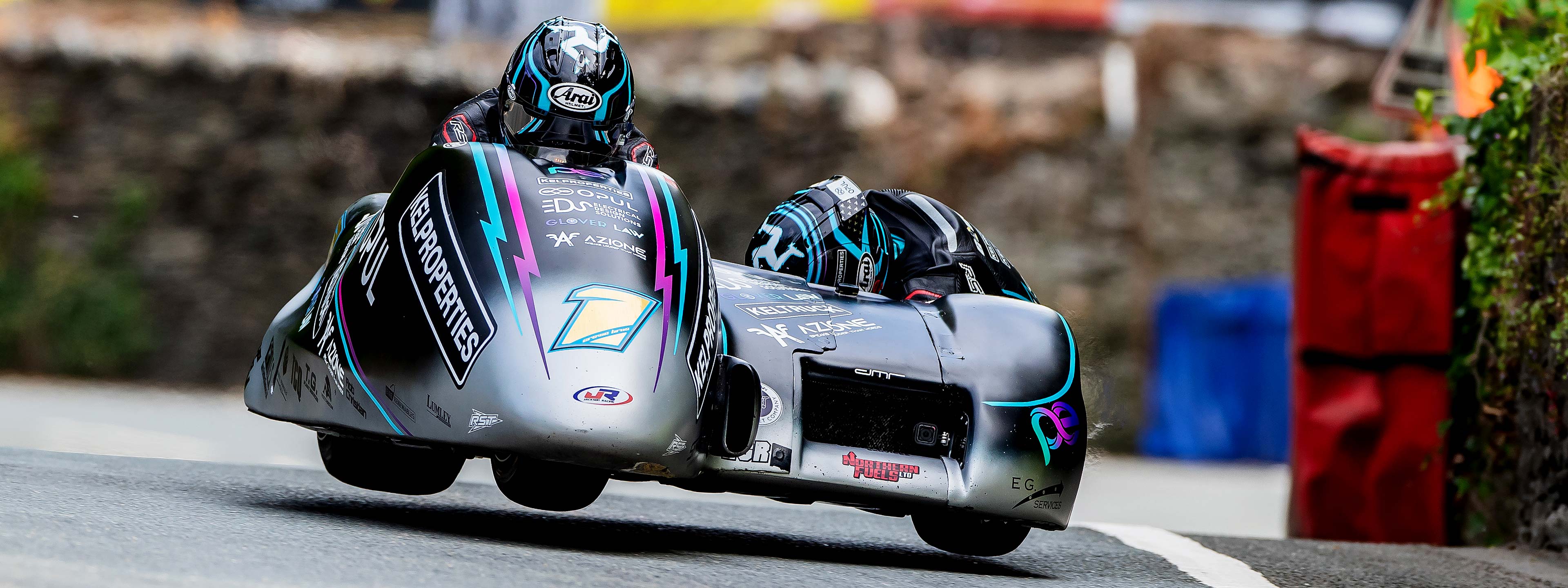
Sidecar racing features machines with purpose-built chassis, which owe more in design to open-wheel car racing than motorcycle racing.
Piloted by a driver and a passenger, TT Sidecars use production-derived engines from modern middleweight machines including the Yamaha R7, Aprilia RS660 and Kawasaki Ninja 650, within a technical framework aligned with British Sportbike regulations from 2027, alongside other eligible engines within the framework.
The driver is positioned kneeling behind the engine with hands near the front wheel, while the passenger moves around the platform at the rear to transfer weight through corners and under acceleration and braking. The driver and passenger must work together precisely, with communication, timing and movement all playing an important part in the performance of the machine. The pairing must work in harmony to be a successful team.
CLASS STATISTICS |
|
| Races | Motul Sidecar Race 1 & 2 |
| Race Distance | 2 laps / 75.46mi (121.44km) |
| Lap Record | Ryan & Callum Crowe, Honda LCR – 121.021mph / 18m42.350s – 2025 |
| Race Record | Ben & Tom Birchall, LCR Honda 600 – 119.784mph / 56m41.816s – 2023 |
| Number Board | Any |
| Manufacturers | Baker, DDM, DMR, Ireson, LCR, MR Equipe, SGR, Shelbourne |
| Electronics | Mectronik ECU |
NEW GENERATION OF SIDECARS
From 2027, TT Sidecars will compete under a revised technical framework designed to provide a more controlled and sustainable future for the class.
The traditional 600cc four-cylinder formula will be replaced by production-derived engines aligned with British Sportbike regulations, with controlled electronics and Balance of Performance designed to bring greater equivalence between different engine configurations.
Existing chassis designs will remain eligible, while revised requirements for bodywork, construction, safety and technical compliance will provide a clearer framework for the next generation of TT Sidecars.